
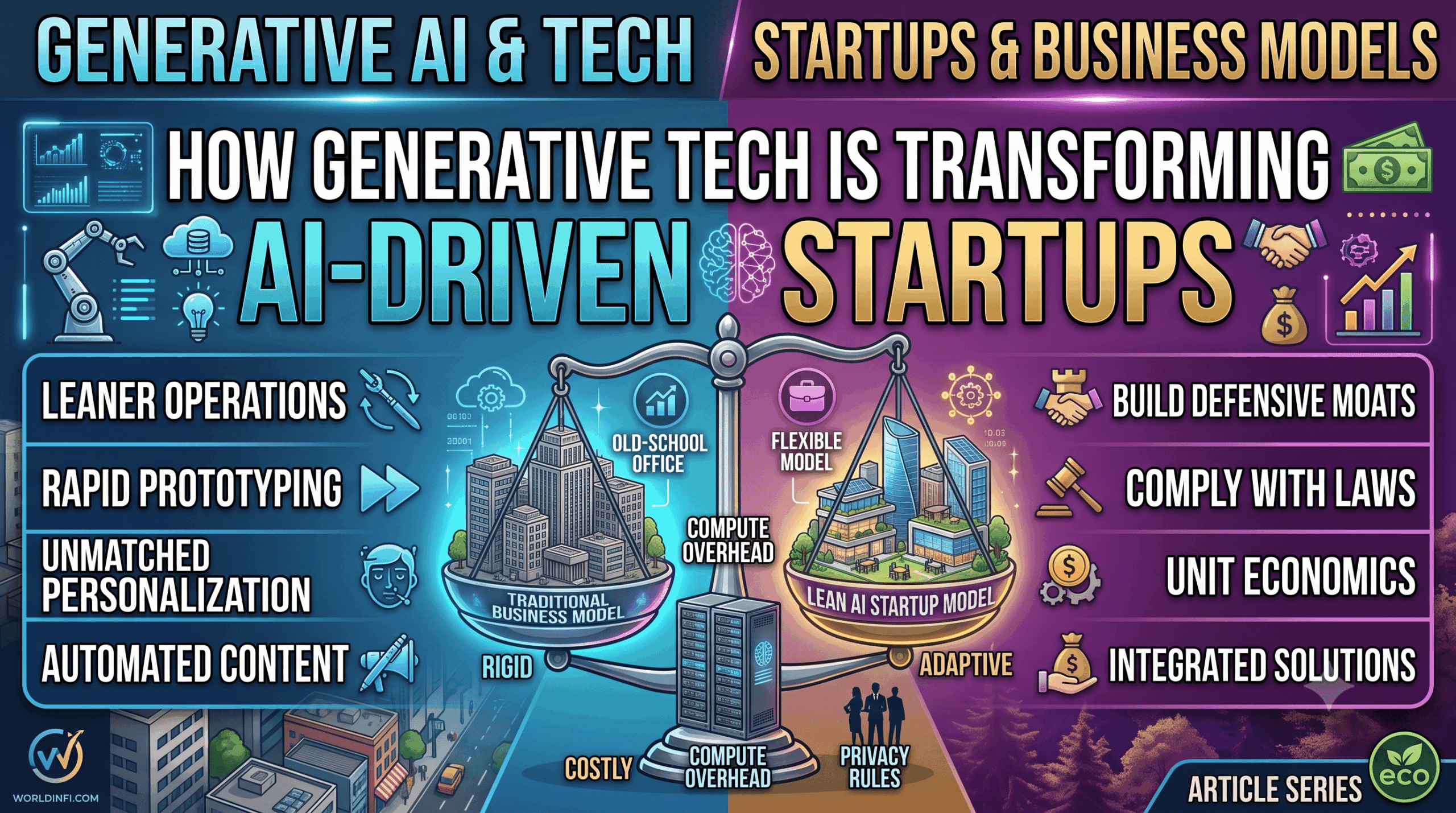
AI-Driven Startups to Watch: How Generative Tech Is Transforming Business Models
Artificial intelligence is no longer restricted to large enterprise research labs. The democratized availability of generative AI tools and large language models (LLMs) has sparked a wave of entrepreneurship worldwide. Modern startups are no longer building software from scratch; instead, they are leveraging AI building blocks to automate workflow friction, personalize consumer experiences, and create entirely new product categories.
Key Sectors Transformed by Generative Startups
1. Automated Workflow & Knowledge Management
Modern enterprises suffer from fragmented data spread across chats, cloud storage, and email chains. AI startups are solving this by building contextual search and automation engines that act as dynamic corporate knowledge bases. Employees can ask plain-language questions and instantly receive aggregated insights, saving hours of manual data hunting.
2. Personalized Healthcare & Diagnostics
Startups at the intersection of AI and biotech are analyzing patient data, medical imaging, and genetic markers at speeds previously impossible. Machine learning algorithms help clinicians flag subtle anomalies in scans, accelerate drug discovery pipelines, and generate personalized treatment recommendations based on patient history.
3. Hyper-Personalized Education Tech (EdTech)
Traditional one-size-fits-all education is giving way to AI tutors that adapt in real time to a student’s learning pace. Early-stage startups in EdTech are deploying AI agents capable of grading assignments instantly, offering step-by-step logic hints, and generating custom study plans based on individual knowledge gaps.
How AI Micro-Startups Are Disrupting Traditional Markets
Historically, launching a software startup required a team of engineers and millions of dollars in seed funding. Generative AI tools have altered those startup economics:
-
Leaner Operational Costs: Small teams of two or three founders can now build, market, and deploy software products previously requiring dozens of employees.
-
Rapid Prototyping: Founders can validate minimum viable products (MVPs) in days rather than months, speeding up product-market fit cycles.
Navigating the Challenges: Moats, Privacy, and Compute
While the barrier to entry is lower, AI-driven startups face distinct operational headwinds:
-
Building Sustainable Defensive Moats: Startups that merely wrap simple wrappers around third-party API models risk rapid commoditization. Successful founders build proprietary datasets and deep integration workflows that competitors cannot easily copy.
-
Data Privacy Regulations: Handling user data responsibly remains paramount. Compliance with global privacy frameworks like GDPR and HIPAA requires strict data handling practices.
-
Compute Overhead: Model training and API inference costs can escalate quickly as user bases grow, demanding disciplined unit economics.
Conclusion
Generative AI represents a fundamental platform shift. The startups that thrive over the coming decade will be those that use AI not merely as a gimmick, but to deliver seamless solutions to real human problems.

Team at World Infi