
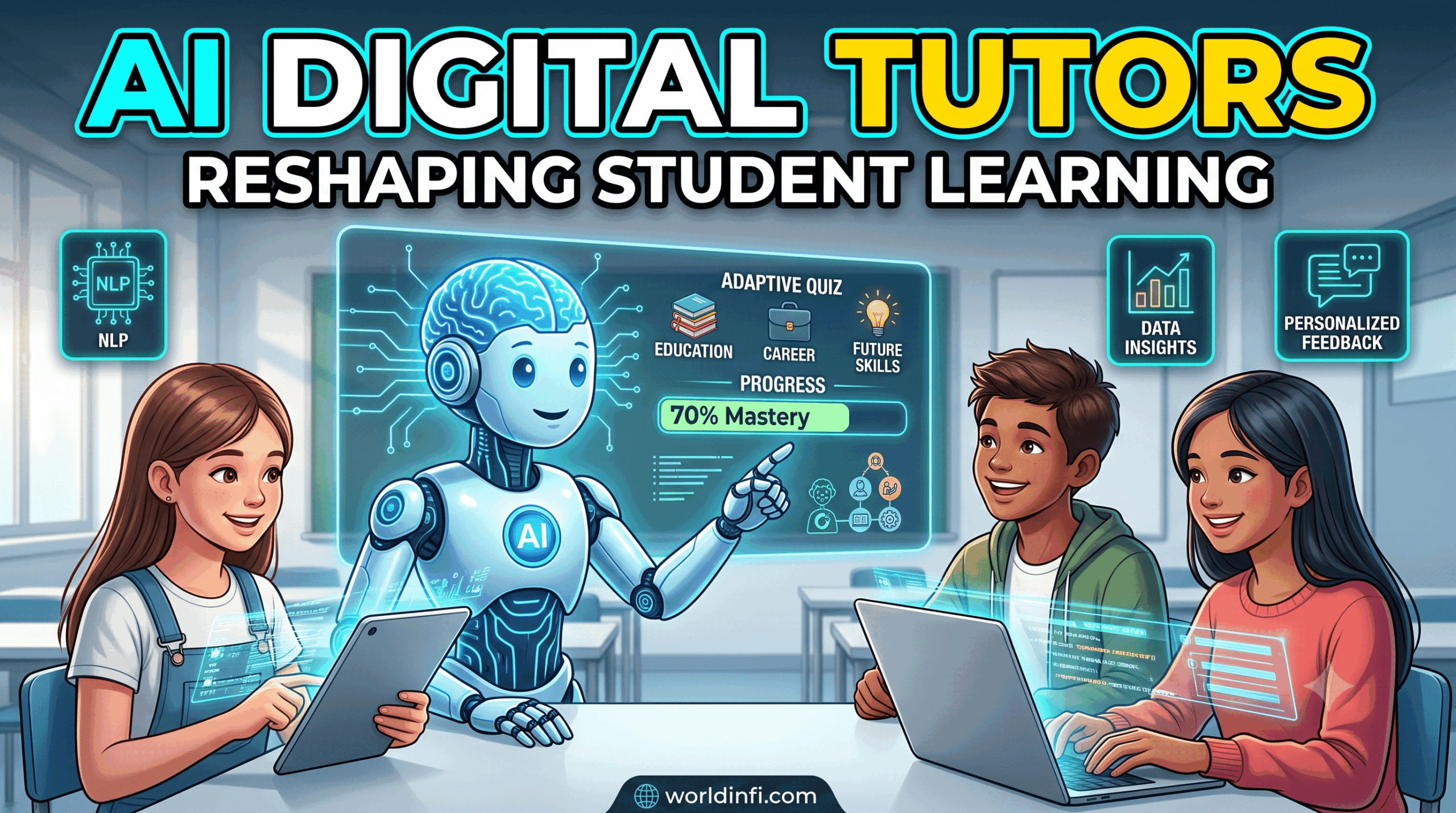
How AI Digital Tutors Are Reshaping Student Learning
The global education landscape is undergoing a fundamental transformation driven by advancements in artificial intelligence. For generations, traditional classroom learning operated on a standardized, one-size-fits-all model. Teachers, constrained by class sizes and rigid schedules, often struggled to cater to individual learning paces. Today, AI digital tutors are bridging this gap, offering personalized, adaptive, and round-the-clock academic support to students worldwide.
What Are AI Digital Tutors
An AI digital tutor is an intelligent software system powered by natural language processing (NLP), machine learning algorithms, and real-time data analytics. Unlike basic search engines or static online quizzes, these tools analyze how a student learns, identifying specific knowledge gaps, learning styles, and mastery levels in real time.
Key Pillars of AI-Driven Education
1. Adaptive Learning Paths
Every student processes information differently. AI tutors adjust content difficulty dynamically based on user performance:
- Targeted Reinforcement: If a student struggles with algebraic equations, the system automatically introduces foundational arithmetic concepts before moving forward.
- Accelerated Advancement: For advanced learners, the platform bypasses repetitive introductory material, offering challenging extension problems to maintain engagement.
2. Round-the-Clock Academic Support
Learning does not stop when the school bell rings. AI digital tutors provide instant assistance with homework, exam preparation, and conceptual clarity at any hour:
- Interactive Step-by-Step Guidance: Rather than simply providing correct answers, modern AI tutors guide students through multi-step logic pathways, prompting critical thinking.
- Multilingual Accessibility: Students can query concepts in their native language, breaking down linguistic barriers in international education.
3. Continuous Data Insights for Educators
AI digital tutors do not replace classroom teachers; instead, they serve as teaching assistants. By aggregating anonymized student performance data, platforms generate actionable dashboards for educators, highlighting class-wide misconceptions and helping teachers refine lesson plans.
Essential Skills for Students and Educators
To fully leverage AI tutors, learners and educators must develop complementary digital competencies:
- Prompt Literacy: Learning how to ask clear, structured questions to extract accurate explanatory insights from AI models.
- Critical Evaluation: Developing healthy skepticism to verify facts and recognize model limitations or potential hallucinations.
- Ethical AI Usage: Understanding academic integrity standards while using AI tools as learning catalysts rather than shortcuts.
Conclusion
AI digital tutors represent a major leap toward truly equitable and personalized education. By combining human instruction with adaptive technological support, students gain access to custom learning environments tailored to their unique academic potential.

Team at World Infi