
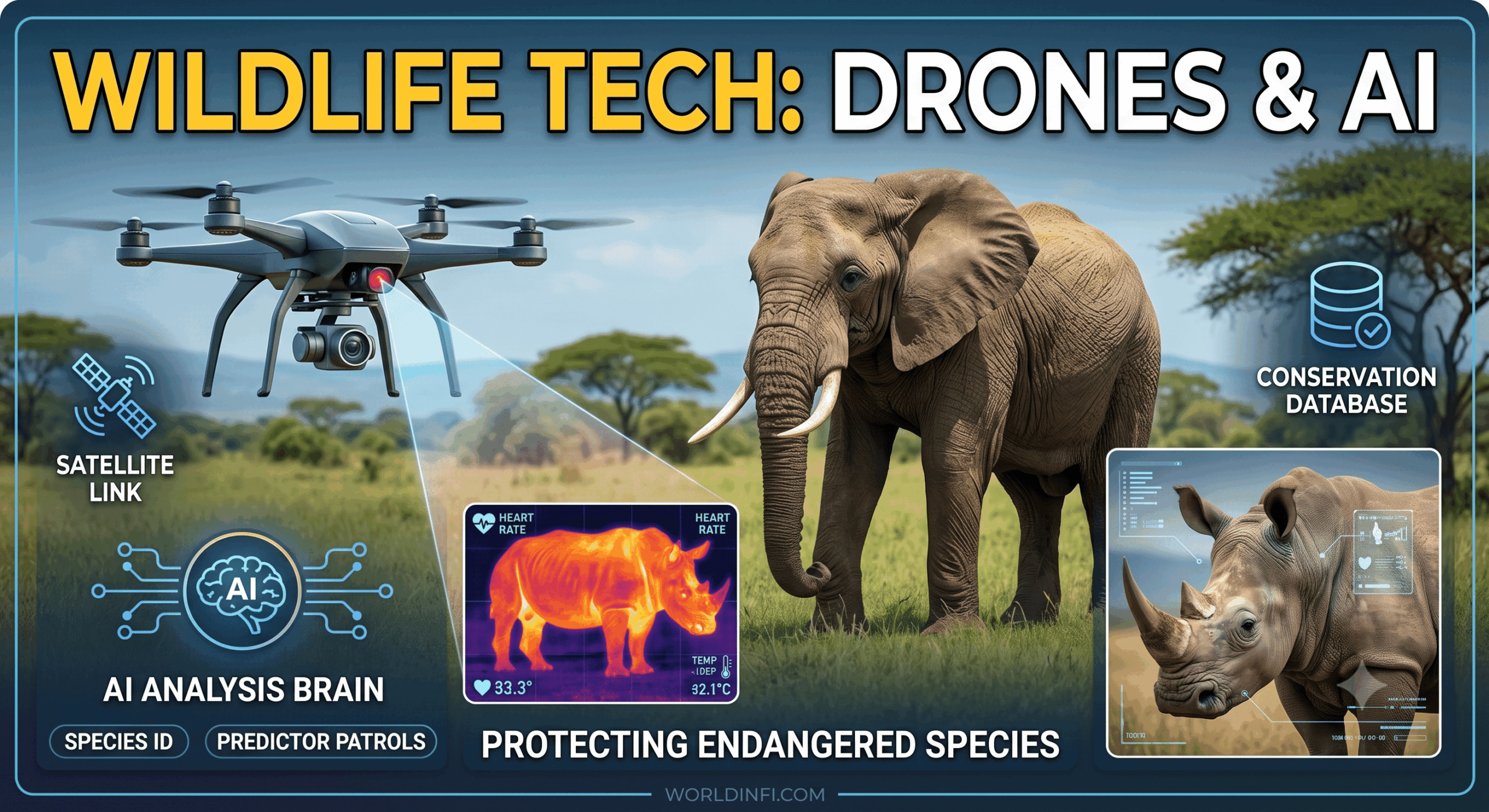
Wildlife Conservation Tech: How Drones and AI Are Protecting Endangered Species
Efforts to save endangered species from extinction have historically relied on manual labor—rangers tracking animals on foot, counting populations visually, and patrolling vast natural parks on foot or by vehicle. Today, poaching networks and rapid habitat destruction demand faster solutions. In response, environmentalists and conservation scientists are deploying cutting-edge technology; specifically, autonomous drones and artificial intelligence; to protect vulnerable ecosystems worldwide.
The Role of Drones in Conservation
1. Anti-Poaching Aerial Patrols
Illegal wildlife trade is a multi-billion-dollar global illicit market. Thermal-imaging drones can fly quietly over vast national parks at night, detecting the heat signatures of poachers before they reach protected rhinos, elephants, or tigers. Park rangers receive real-time location alerts directly on their mobile devices, allowing them to intercept intruders safely.
2. Habitat Mapping & Reforestation
High-resolution camera drones capture aerial imagery of terrain, mapping rainforest loss, illegal mining camps, and forest fires with spatial precision. Specialized seed-planting drones are even used to fire bio-degradable seed pods into deforested zones, planting thousands of trees per day in areas inaccessible to humans.
How Artificial Intelligence Enhances Wildlife Protection
1. Automated Camera Trap Analysis
Conservationists place motion-sensing “camera traps” throughout forests to monitor species health. In the past, researchers spent hundreds of hours manually sorting through thousands of photos. Modern AI vision models can automatically identify species, count animal numbers, and flag injured individuals within minutes.
Camera Trap Captures Image
        │
        ▼
   AI Vision System
        │
  ├── Identifies Species
  ├── Counts Individual Animals
  └── Flags Abnormal Behavior / Invasions
        │
        ▼
Instant Alert to Wildlife Researchers
2. Acoustic Monitoring in Marine and Forest Biomes
Subterranean and underwater microphones collect millions of hours of audio recordings across oceans and rainforests. AI audio models are trained to detect specific bio-acoustic markers—such as the call of an endangered bird, the sound of a chainsaw, or the underwater noise of illegal dynamite fishing—instantly alerting local marine authorities.
3. Predicting Animal Movements to Prevent Human-Wildlife Conflict
In communities bordering natural reserves, wild animals frequently wander into farms, damaging crops or posing risks to residents. AI predictive models analyze historical movement patterns, weather conditions, and seasonal food availability to warn local communities before herds approach farm boundaries.
Real-World Success Stories
- African Savannahs: Night-flying drone sweeps equipped with AI computer vision have significantly lowered rhino poaching incidents in key reserves.
- Ocean Cetacean Monitoring: Marine biologists use aerial drones to collect health samples (such as blowhole spray) from migrating whales without causing stress to the animals.
Looking Ahead
Integrating robotics and machine learning into environmental conservation bridges the gap between limited funding and vast natural spaces. As battery tech improves and AI models become lighter, technology will remain one of our most effective tools to protect global biodiversity.

Team at World Infi