
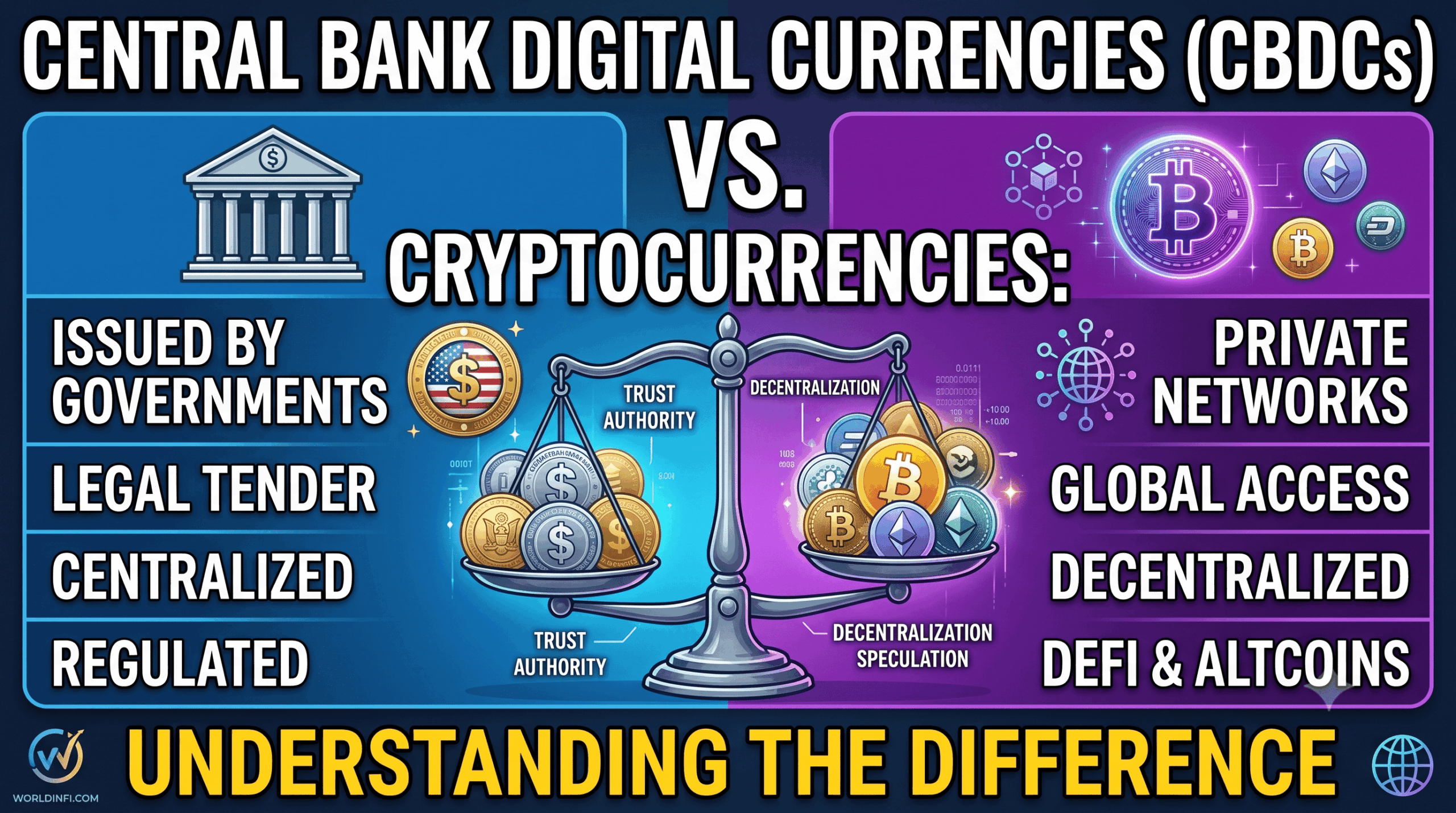
Central Bank Digital Currencies (CBDCs) vs. Cryptocurrencies: Understanding the Difference
The financial landscape is undergoing its biggest transformation since the introduction of plastic credit cards. Digital payments are rapidly replacing physical cash around the world. However, as money goes digital, a major debate has emerged around two distinct concepts: Central Bank Digital Currencies (CBDCs) and decentralized cryptocurrencies like Bitcoin and Ethereum. While both exist as digital assets, they operate on fundamental principles that are almost exact opposites.
What Is a Central Bank Digital Currency (CBDC)
A CBDC is a digital form of a country’s official fiat currency issued and regulated directly by its central bank (for example, the Federal Reserve in the US or the Reserve Bank of India). Unlike commercial bank digital transactions, a CBDC represents a direct liability of the central bank itself—just like a physical paper bill in your wallet.
What Is a Cryptocurrency
A cryptocurrency is a private, decentralized digital asset that relies on cryptographic techniques and distributed ledger technology (blockchain) to record transactions. Cryptocurrencies operate without a central authority, bank, or government controlling the network.
Key Comparisons: CBDC vs. Crypto
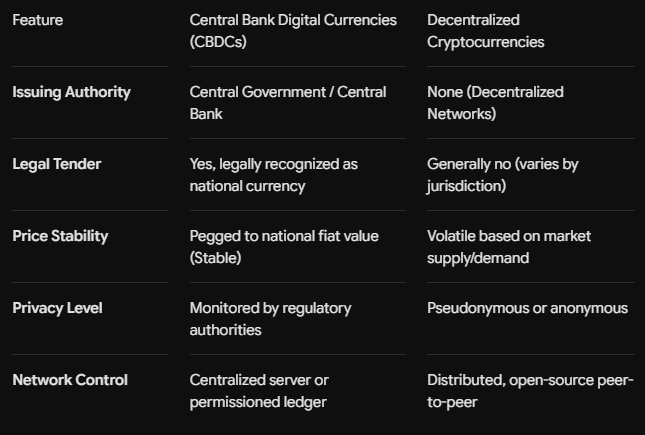
Why Governments Are Launching CBDCs
-
Financial Inclusion: Offering unbanked citizens safe access to digital payment options without requiring a commercial bank account.
-
Lower Payment Processing Costs: Reducing the immense physical costs of printing, transporting, and managing paper currency.
-
Faster Cross-Border Settlements: Streamlining international trade transactions that currently take days down to seconds.
The Debate: Privacy vs. Security
The central point of contention surrounding CBDCs is user privacy. Because central banks maintain digital control over CBDC infrastructure, critics worry governments could theoretically monitor purchasing habits, place transaction limits, or program expiry dates on money.
Conversely, supporters of cryptocurrencies value the permissionless nature of decentralized networks, though critics highlight issues like price volatility, regulatory risks, and energy consumption.
Conclusion
CBDCs and cryptocurrencies represent two vision models for the future of money. CBDCs seek to modernize and streamline existing sovereign currency systems, while cryptocurrencies aim to offer an alternative, decentralized monetary framework. Both will co-exist as digital payments expand globally.

Team at World Infi