
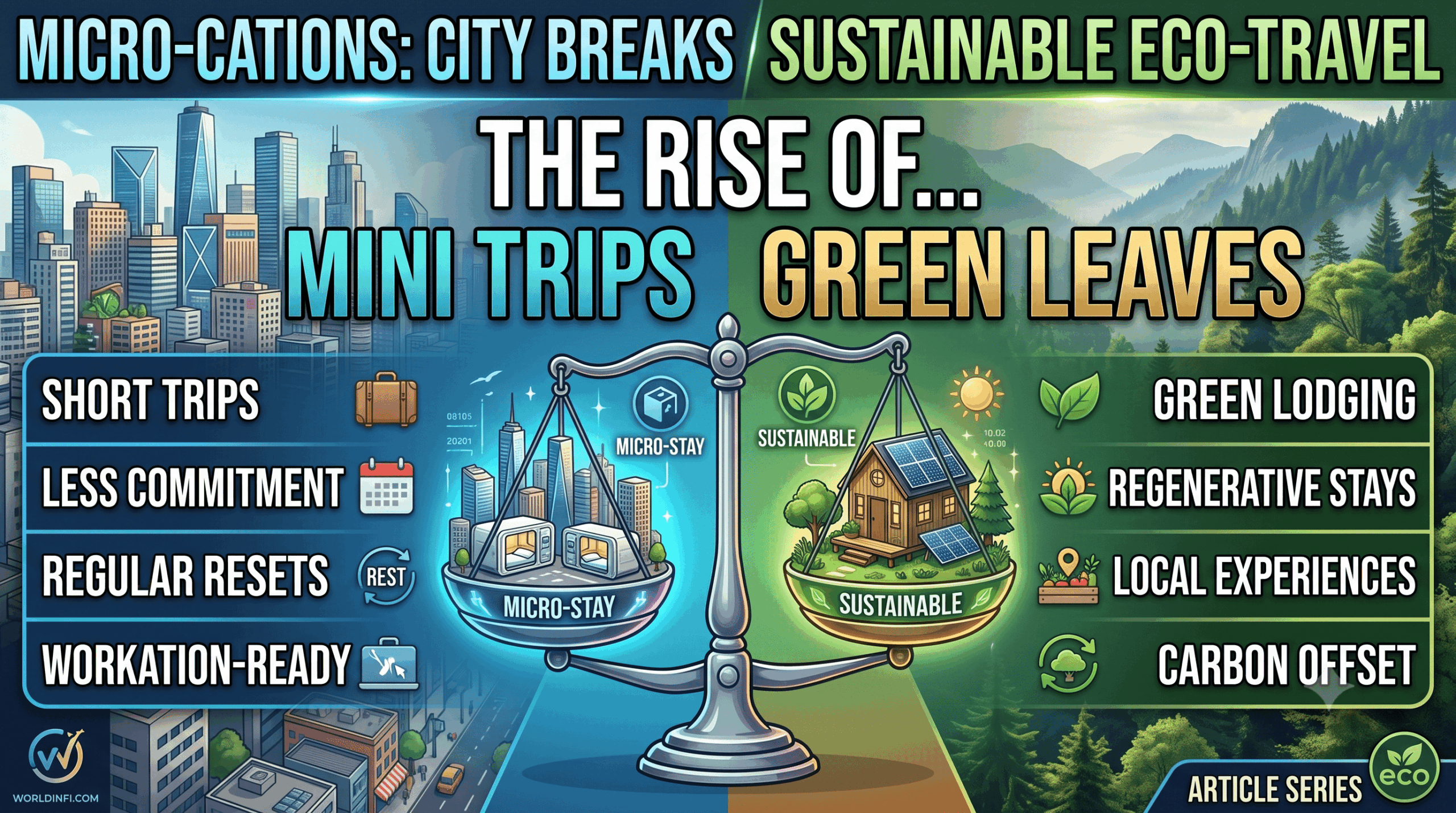
The Rise of Micro-Cations and Sustainable Eco-Travel Trends
The way people travel is undergoing a structural shift. Long, two-week holidays are increasingly being supplemented or entirely replaced by shorter, high-density getaways known as “micro-cations.” At the same time, growing awareness of climate change has turned eco-conscious travel from a niche preference into a major industry trend. Together, these movements are redefining modern hospitality and tourism.
What Is a Micro-Cation
A micro-cation is defined as a short leisure trip lasting four nights or fewer. Several cultural and economic shifts drive this travel model:
-
Remote and Hybrid Work Dynamics: Employees can extend a regular weekend by working remotely on a Friday or Monday, creating a three-night trip without taking formal vacation time.
-
Prevention of Burnout: Frequent, shorter breaks provide regular mental resets throughout the year rather than relying on a single annual getaway.
-
Cost Efficiency: Micro-cations allow travelers to explore nearby destinations with lower transportation costs and less commitment.
The Intersection with Sustainable Eco-Travel
As travel frequency rises, conscious travelers are becoming increasingly mindful of their environmental footprint. The sustainable travel movement focuses on leaving destinations better than they were found.
Key Pillars of Sustainable Tourism:
-
Carbon Footprint Reduction: Favoring rail travel, electric vehicle road trips, or direct flights over multi-layover journeys.
-
Supporting Local Communities: Directing tourism spending toward locally owned stays, authentic dining options, and independent tour guides rather than international hotel chains.
-
Conservation Hospitality: Booking stays at eco-lodges that use off-grid solar energy, rainwater harvesting systems, and zero-single-use-plastic policies.
Top Eco-Friendly Destination Models Worldwide
-
Off-Grid Cabin Stays: Minimalist cabins situated in natural settings allow urban dwellers to disconnect without building large resort infrastructure.
-
Agritourism: Travelers stay on working organic farms, learning about regenerative agriculture while eating farm-to-table food.
-
Nature Reserve Tourism: Guided visits to protected forests and marine reserves where booking fees directly fund local wildlife protection efforts.
How to Plan a Responsible Micro-Cation
-
Pack Light: Reducing baggage weight directly improves transport fuel efficiency.
-
Respect Local Ecosystems: Stick to designated trails, observe wildlife from safe distances, and leave no trash behind.
-
Travel Off-Peak: Visiting popular destinations during mid-week or shoulder seasons reduces pressure on local infrastructure and prevents overtourism.

Team at World Infi