
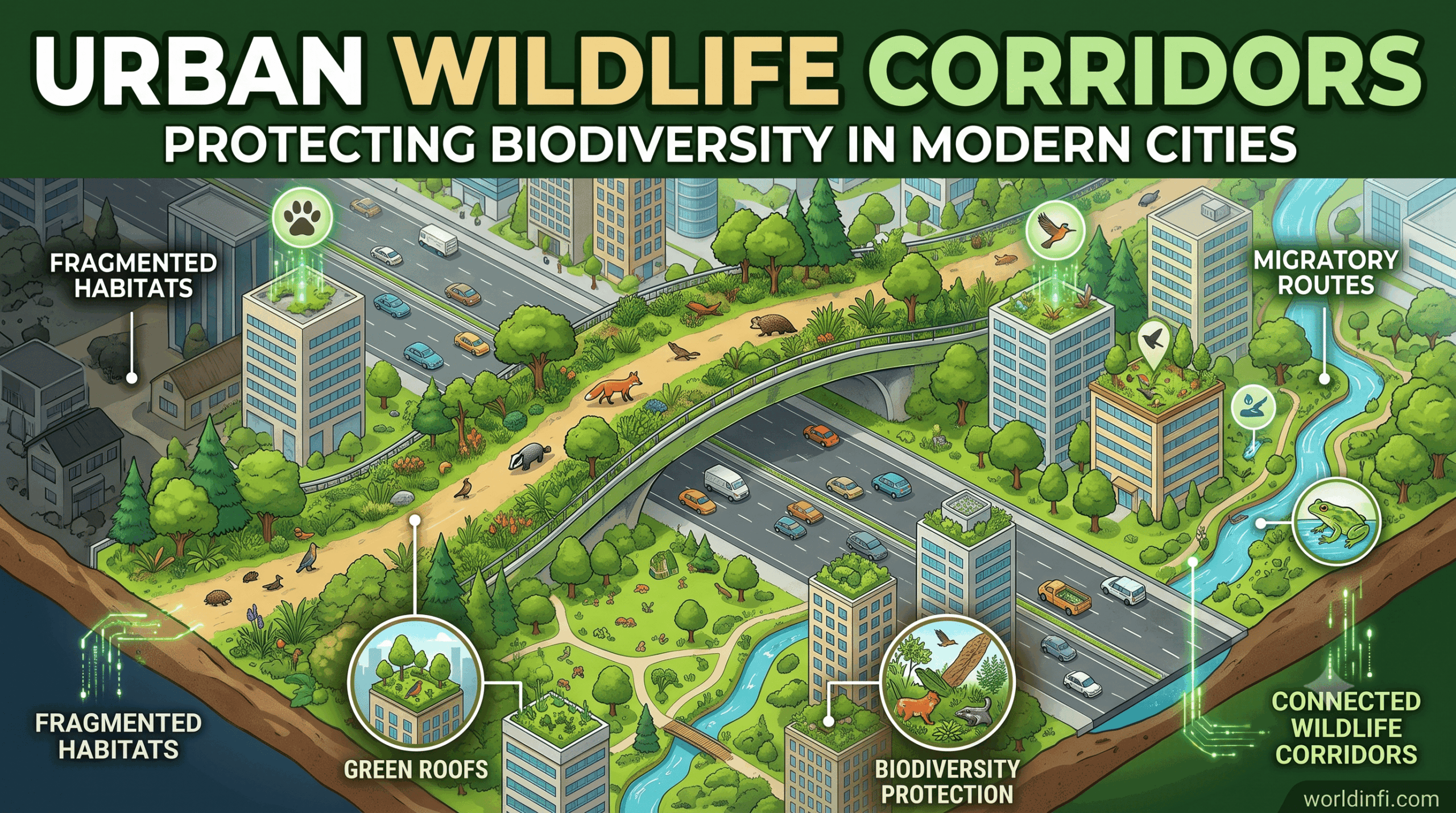
Urban Wildlife Corridors: Protecting Biodiversity in Modern Cities
Rapid urbanization has dramatically altered natural habitats worldwide. As cities expand into concrete jungles, natural landscapes are fragmented into isolated patches of green space, stranding wildlife populations and disrupting migratory pathways. To combat biodiversity loss, urban planners, ecologists, and local communities are designing urban wildlife corridors; connected green networks that allow birds, insects, and small mammals to navigate urban centers safely.
Understanding Urban Wildlife Corridors
An urban wildlife corridor is a continuous or connected network of natural habitat strips embedded within a developed cityscape. These corridors link isolated parks, nature reserves, and riverbanks, enabling animals to forage for food, find mates, and maintain genetic diversity without encountering hazardous road traffic.
Key Architectural and Ecological Features
1. Green Roofs and Living Walls
Modern architectural design increasingly incorporates living vegetation directly onto building exteriors:
-
Avian Waystations: Green roofs provide resting and feeding spots for migratory birds navigating dense skyscraper clusters.
-
Pollinator Sanctuaries: Living walls filled with native flowering plants support essential insect populations, including bees and butterflies.
2. Eco-Bridges and Wildlife Overpasses
Highways and major urban roads present severe hazards to terrestrial wildlife. Vegetated overpasses and subterranean culverts allow animals to cross roadways safely, significantly reducing human-wildlife traffic accidents.
3. Urban Forest Canopies and River Linear Parks
Protecting tree canopy coverage along street grids and maintaining natural vegetation along city riverbanks creates continuous biological travel routes across urban zones.
Real-World Success Stories
Connected Green Infrastructure
 ├── Green Roof Networks ──► Migratory Bird Protection
 ├── Eco-Bridges ──────────► Safe Terrestrial Animal Crossing
 └── River Corridors ──────► Amphibian & Aquatic Habitat Continuity
-
Avian Safe Corridors: Global urban centers along major bird migration routes are implementing “Lights Out” initiatives during migration seasons alongside green roof construction to prevent bird collisions.
-
Pollinator Highways: Metropolises worldwide are transforming highway medians and unused urban plots into wildflower corridors to restore pollinator populations.
How Communities Can Support Local Wildlife
-
Plant Native Flora: Replace non-native lawn grass with indigenous trees, shrubs, and flowering plants that provide food and shelter for local bird and animal species.
-
Reduce Light and Chemical Pollution: Minimize unnecessary outdoor night lighting and eliminate synthetic pesticides in home gardens to protect nocturnal wildlife and beneficial insects.
-
Provide Safe Water and Nesting Spots: Install clean birdbaths, insect hotels, and nesting boxes in backyards and community parks to strengthen local biodiversity networks.

Team at World Infi